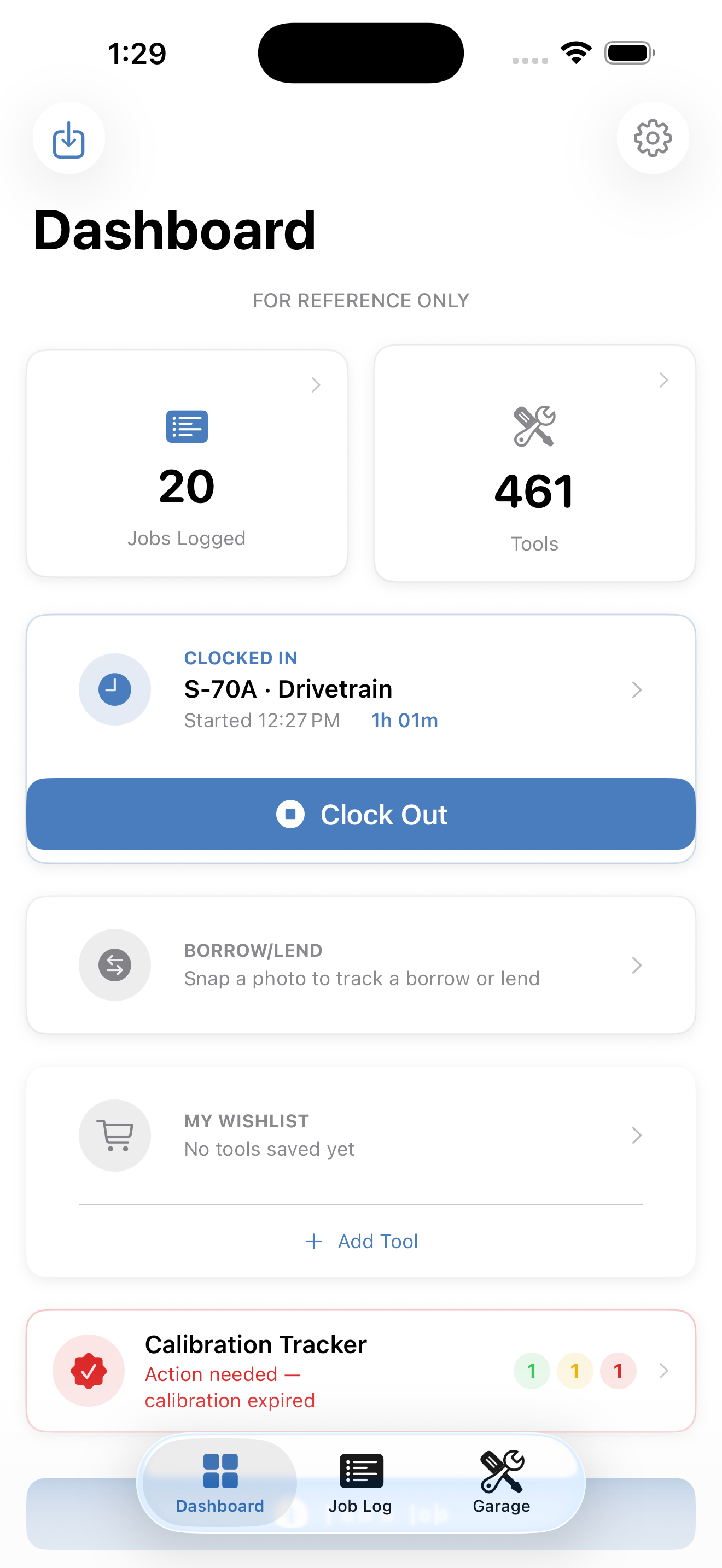
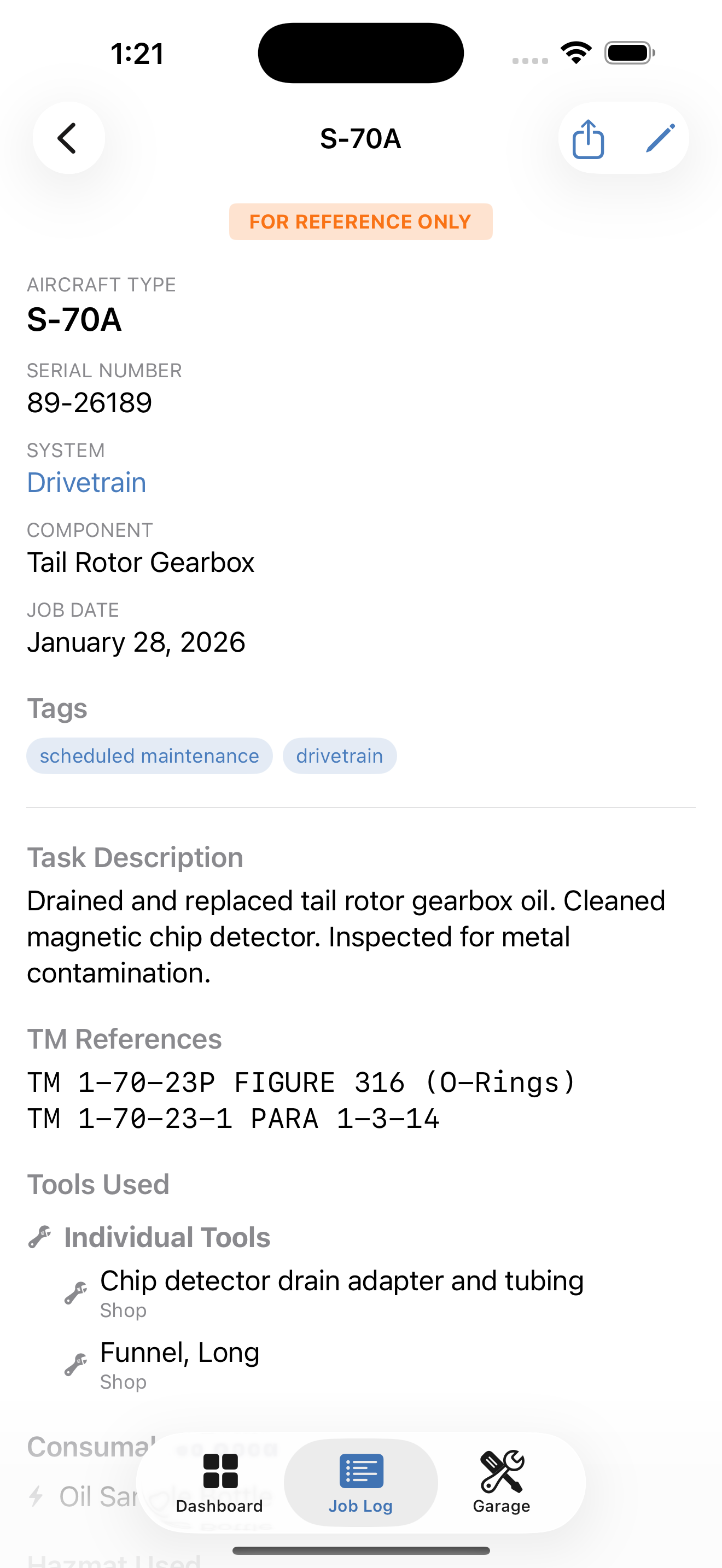
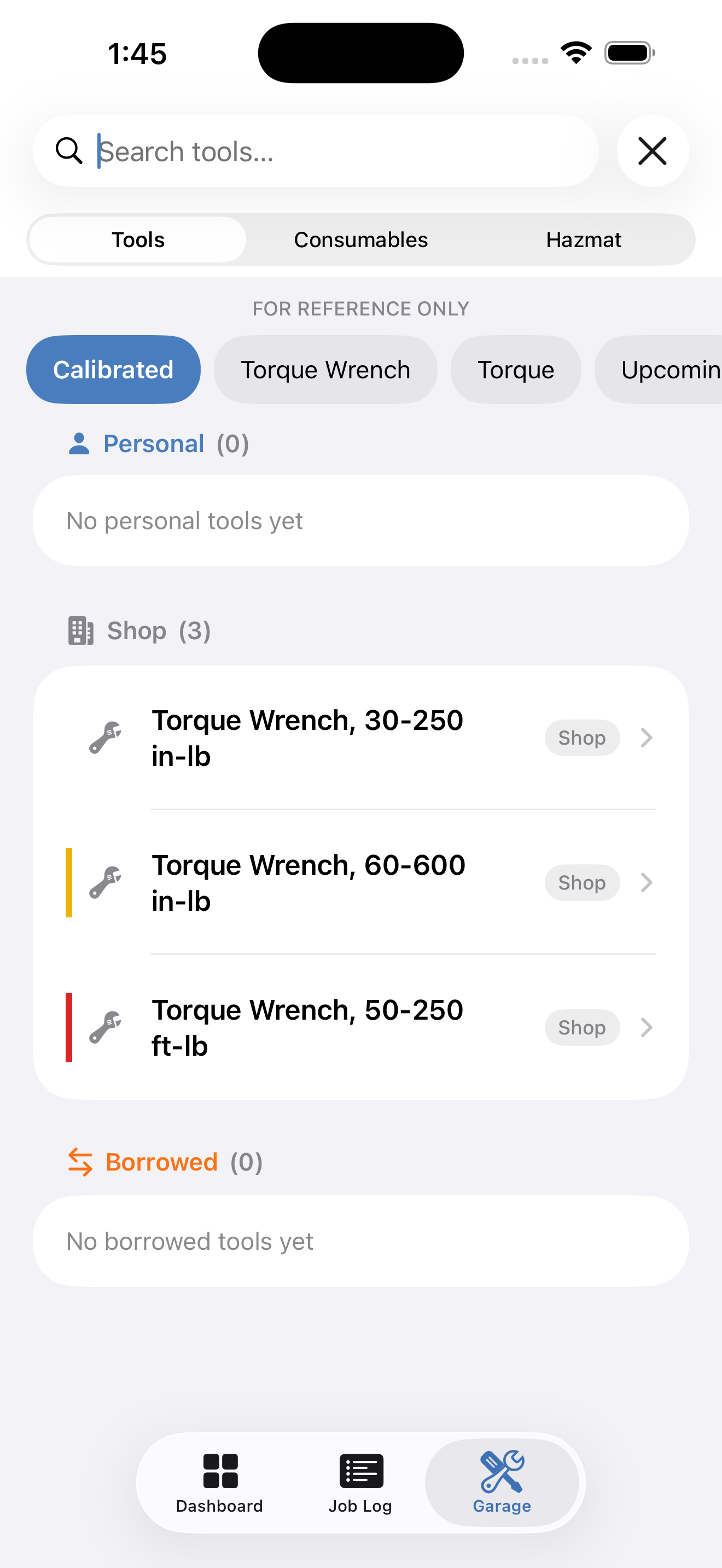
Which socket fit. What hazmat actually worked. The alternate you ended up using when the spec tool was missing. Who you borrowed it from. The stuff that lives in your notebook — except now you can search it, share it, and find it three years from now.

Built for Airframe & Powerplant Mechanics — the ones who'll see this job again in three months, a year, or three years.
Pilots have logbooks.
Aircraft have logbooks.
Now you have one too.
Treat it like a flight logbook. One entry per job. The first few months feel light — by year two, you've got a real reference. By year five, it's the most useful book in your toolbox, and the only one written entirely in your own voice.
Every TM had them. Yellow stickies, pencil margins, dog-eared pages with arrows. The real knowledge — the stuff that wasn't in the procedure but mattered every time you ran it.
Digital manuals don't have margins. PDFs don't take stickies. The shared knowledge that used to live in those notes is gone — or sitting in someone's locker, on the back of a work card, only useful to one person.
FRO is the format those notes deserved all along. Searchable — by aircraft, system, or the word you can almost remember. Readable — your voice, your structure, six months or six years later. Shareable — AirDrop a job to the new mechanic on the line, or trade the whole library with a teammate. The sticky note finally gets a system around it.
— same notes. Same voice. Just findable now.Author's note · Build 27
Search prior jobs on this airframe and system. Pull what you used last time and what to watch for.
The TM, AMM, and Work Card stay in charge. FRO doesn't sign off, doesn't approve, doesn't get in the way.
The TM tells you the procedure. FRO captures what isn't in the TM — the socket that fit, the alternate that worked.
Aircraft, system, what you used, what to remember. Two minutes if you're slow.
Three months or three years later, the same airframe rolls in. The notebook is already open.